Arashiyama Bamboo Forest: the complete visitor guide
What you are actually going to see
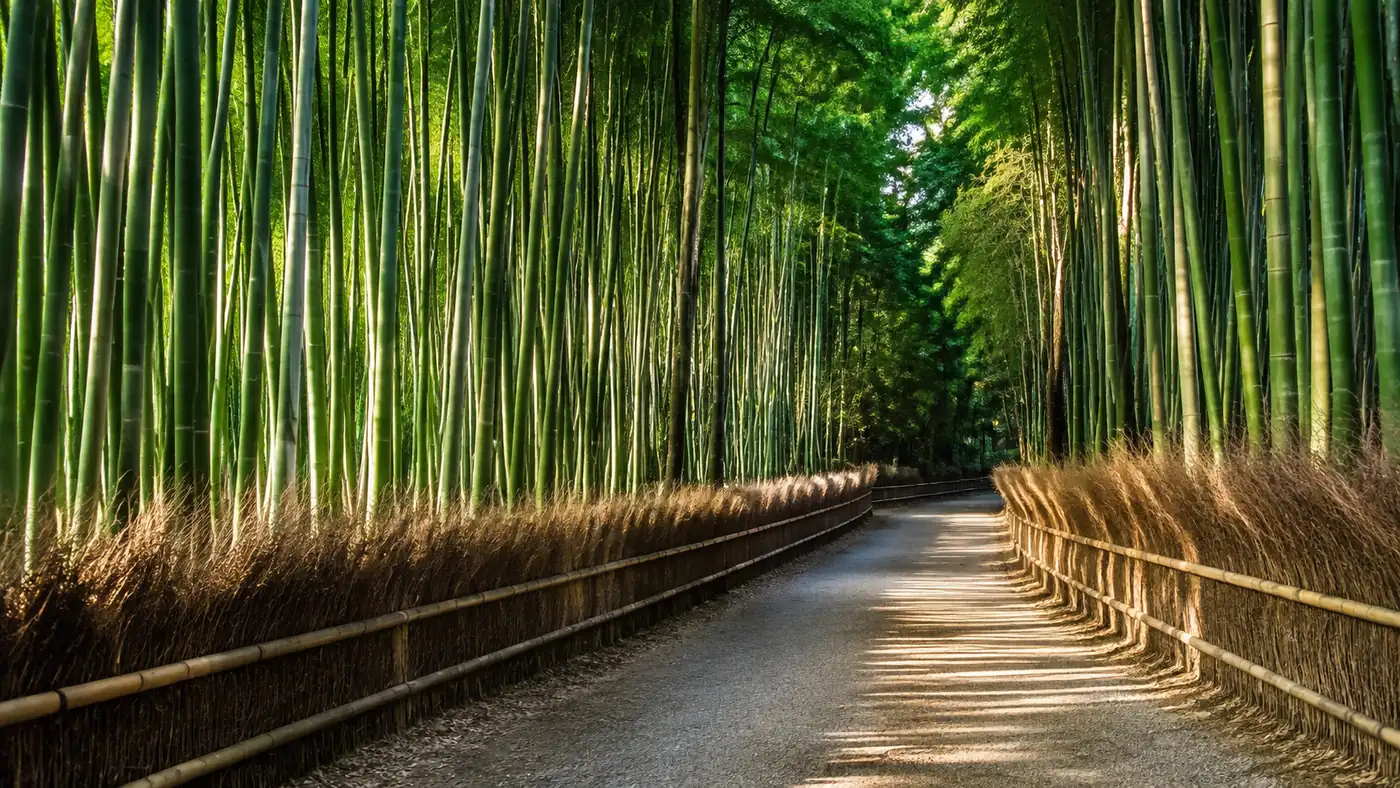
It helps to shrink your expectations before you arrive, because almost every disappointed review comes from a picture that promised something else. Chikurin-no-michi is a lane. It runs a few hundred metres between walls of moso bamboo, gravel underfoot, low dried-bamboo fencing on both sides. The culms lean in overhead and the light that reaches the path is green. That is the whole experience, and at the right hour it is genuinely worth the trip. It is not a forest you can wander into: the bamboo is fenced off on both sides for the entire length, and the photographs that appear to show an empty wilderness were taken by pointing a long lens down a busy path at dawn.
The corollary is that the grove alone does not fill a morning. Most people spend 10–15 minutes on the path itself, or half an hour with Nonomiya Shrine and photographs. If you have come across Kyoto for it, you want the rest of Arashiyama planned before you set off.
Getting there: three stations, and they are not interchangeable
JR Saga-Arashiyama is the one to aim for. The Sagano Line takes about 15 minutes from Kyoto Station and costs around ¥240; from the exit it is roughly ten minutes north on foot to the top of the path. Randen Arashiyama, the tram terminus, drops you in the middle of the shopping street instead, five minutes from the south end — the Kimono Forest, the rows of pillars wrapped in printed textile, stands free on its platform. Hankyū Arashiyama is on the far side of the river and suits arrivals from Osaka, but you pay for it with a ten-minute walk over Togetsukyō Bridge.
Driving is the one option worth ruling out. Parking is scarce, the streets around the grove are narrow, and on an autumn weekend you will spend longer looking for a space than walking the path. All three routes, with fares and walk times.
Walking the path
There is no entrance and no sign announcing one. The path has two ends — the Ōkōchi Sansō gate at the north, Nonomiya Shrine at the south — and you simply find yourself between bamboo. Direction does not change the walk, so pick whichever end your station favours: from JR you arrive at the north, from the tram at the south. Where the path starts, at both ends.
Two things surprise people on the ground. The path climbs gently, and the surface is loose gravel, which makes it harder work than a flat photograph suggests — worth reading first if steps or gradients are an issue. And a narrow parallel lane carries rickshaws through the grove; walkers cannot use it, which is precisely what the rickshaw fare buys.
At the south end, take the two minutes for Nonomiya Shrine. Its torii is built from unstripped black-bark timber rather than painted wood, it appears in The Tale of Genji, and it is the detail that turns a pretty walk into somewhere with a history.
The hour you arrive decides everything
This is the single decision that matters, and it is free to get right. Before about eight in the morning the path is quiet enough to hear birds. By ten it is a slow shuffling queue between the same two bamboo walls, and it stays that way through the afternoon. Dusk thins it out again, but the grove is genuinely unlit — after dark you need your own torch, and going at night is a different proposition altogether.
If you are staying in central Kyoto, the first Sagano Line departures put you on the path before the coaches arrive. It costs the same ¥240 at 6.40 a.m. as it does at 10 a.m., and it is the difference between the grove you came for and the one in everybody else’s photographs.
Hour by hour, and which days are worst · Which season, and why the bamboo is green in all of them.
What actually costs money
Nothing about the path does. The bill comes from what stands around it, and you can pick as few or as many as you like: Tenryū-ji’s garden at ¥500, whose north gate opens straight onto the grove; Ōkōchi Sansō, the actor’s villa garden at the top of the path, where admission includes tea; Iwatayama Monkey Park, which is a genuine 15–20 minute climb above its ticket office; and the two rides through the gorge, the Sagano Romantic Train and the Hozugawa river boat. The full list of what charges and what does not.
Guided tours bundle these, which is usually where their price comes from rather than from the grove itself. What each price band buys sets out where that stops being good value.
A half day that works
Arrive at JR Saga-Arashiyama early and walk straight to the north end of the path, ignoring the shops on the way — they will still be there later, and the bamboo will not still be quiet. Walk the grove south to Nonomiya. Cut into Tenryū-ji through its north gate while the garden is still empty. Come out onto the shopping street for late breakfast, then decide: down to Togetsukyō Bridge and up Iwatayama for the macaques and the view over Kyoto, or north into Sagano for the quieter temples most visitors never reach. Either way you are back at the station by early afternoon having seen the area properly.
If Arashiyama is competing with the other famous walk in Kyoto for a limited number of days, the two compared honestly is the page to read next.
Do you need to book anything?
For the grove: no, and be sceptical of anything sold as a ticket to it, because none exists. Why the “bamboo forest ticket” question keeps coming up.
Booking earns its keep in three cases. A guide is worth it if you want the temples explained rather than photographed. Transport-heavy days are worth booking because the train and boat sell out in autumn and stitching them together yourself eats the morning. And the rickshaw is worth it purely for the lane you otherwise cannot walk down. Everything else you can turn up for.
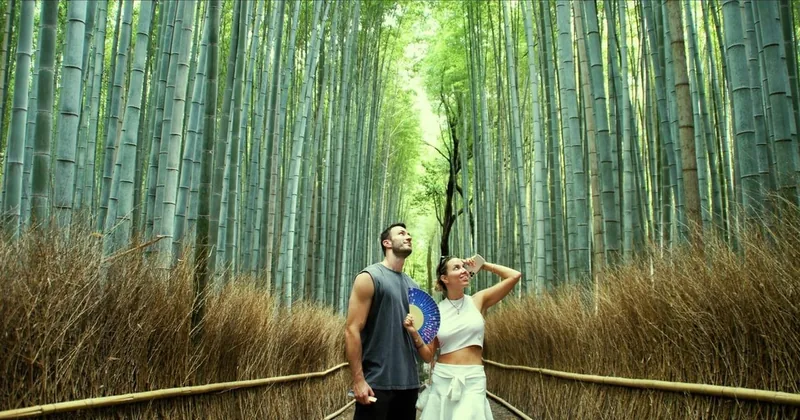 Best all-in valueTemple & monkey park entry included
Kyoto: Arashiyama Bamboo, Matcha, Monkeys & Temple Tour
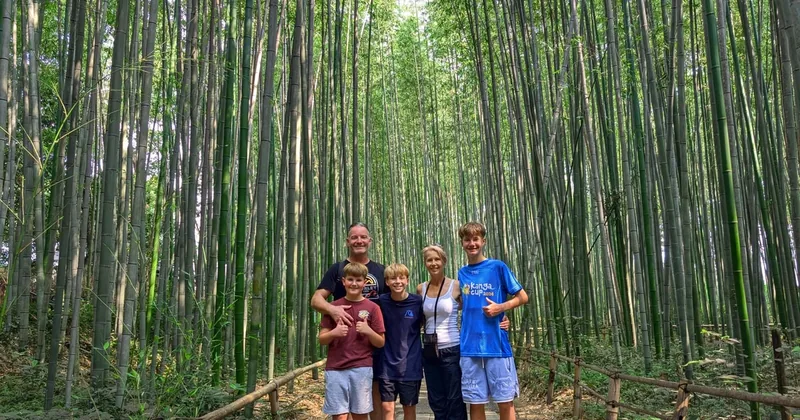 Most reviewedThree entry tickets included
Arashiyama Bamboo & Temple, with Monkeys or a Sake Brewery
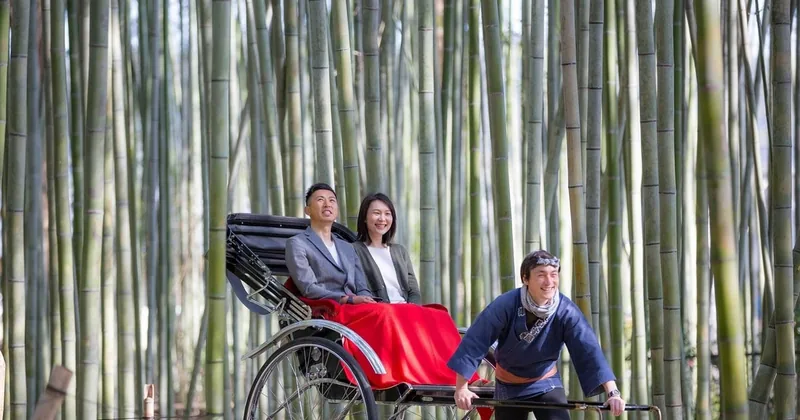 The rickshaw-only lane
Kyoto: Arashiyama Customized Rickshaw Tour & Bamboo Forest
Those are the three that suit most first visits. All fifteen tours and rentals, ranked by price · Eight of them reviewed in detail · Everything above on one map.
Can’t make these dates?
Browse more available Arashiyama bamboo forest tour and find one that fits your schedule — all with instant confirmation and free cancellation.
Frequently asked questions
Do I need a ticket for the Arashiyama Bamboo Forest?
No. The path is a public road through bamboo — there is no gate, no booth and no ticket to buy, at any hour. Tickets exist for the things beside it: Tenryū-ji’s garden, Ōkōchi Sansō, the Monkey Park, the Sagano train and the river boat. The full list of what charges.
How long does the bamboo grove take?
Ten to fifteen minutes to walk end to end, or about thirty to forty-five with Nonomiya Shrine and photographs. Arashiyama as a whole is worth half a day. How long people actually spend here.
What time should I arrive?
Before eight in the morning if you want it quiet. By ten the path is shoulder to shoulder and stays that way into the afternoon. The grove never closes, so the early start costs nothing extra. Hour by hour.
Which station should I use?
JR Saga-Arashiyama for the fastest arrival from Kyoto Station, about fifteen minutes and roughly ¥240, then ten minutes on foot. Randen Arashiyama puts you on the shopping street; Hankyū Arashiyama is across the river and suits arrivals from Osaka. All three compared.
Is a guided tour worth it for the bamboo forest?
Not for the path itself, which needs no explaining and no ticket. It is worth it if you want the temples interpreted, if you want the gorge train and river boat handled for you, or if you want the rickshaw lane, which walkers cannot use. What each price band buys.